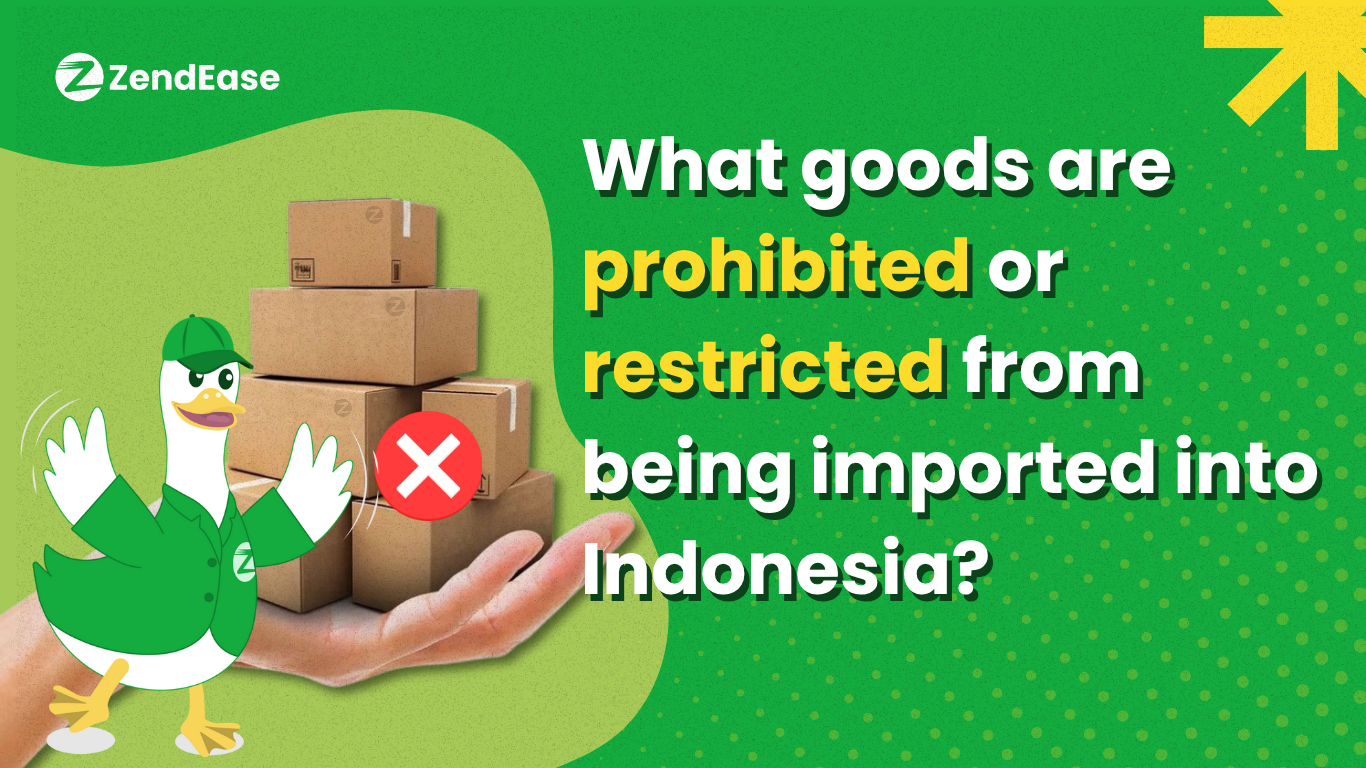
What Goods Are Prohibited or Restricted from Being Imported into Indonesia?
by Muhammad Farhan on Jan 28, 2026
Picture this: You’ve just ordered a shipment of products from overseas. The boxes are packed, the ship is on its way, and you’re already thinking about how to display the goods in your store. But then, your freight forwarder calls. Your shipment is stuck at the port because it contains items that are either prohibited or restricted in Indonesia.
For many first-time importers and SMEs, this is an easy mistake to make. The rules on what you can and can’t bring into the country aren’t always obvious. That’s why understanding the difference between prohibited and restricted goods is essential before you place an order.
Prohibited vs. Restricted Goods: What’s the Difference?
- Prohibited goods are items you can’t import into Indonesia under any circumstances. These are banned to protect public safety, the environment, and national security.
- Restricted goods can be imported, but only if you obtain the right permits or licenses from the relevant government agencies.
Examples of Prohibited Goods
Here are some common categories of goods that are completely off-limits:
- Narcotics and illegal drugs
- Dangerous chemicals (certain pesticides, hazardous waste)
- Counterfeit currency or goods that infringe intellectual property rights
- Weapons, explosives, and certain military equipment
- Pornographic materials
If your goods fall into any of these categories, they will be confiscated and you could face legal penalties.
Examples of Restricted Goods
Importing restricted goods into Indonesia requires specific approvals and additional documentation based on product categories:
- Pharmaceuticals & Medical Devices — BPOM (National Agency of Drug and Food Control) or Ministry of Health permits.
- Food & Beverages — BPOM approval and product labeling compliance.
- Agricultural Products — Quarantine certificates and inspection processes.
- Electronics & Telecommunications Devices — Ministry of Communication and IT (SDPPI) approval.
- Textiles, Footwear & Fashion Items — Additional documentation such as Importer Identification Number (API) and PI Quota permits.
- Precious Metals & Jewelry — Subject to Bank Indonesia regulations.
Whether it’s regulatory approvals, PI quotas, or additional certifications, ZendEase acts as your trusted Importer of Record (IOR), making the entire process seamless.
Why This Matters for SMEs and First-Time Importers
Knowing whether your product is prohibited or restricted saves you from:
- Costly delays and storage fees at the port;
- Legal trouble and possible fines;
- Losing your investment if goods are confiscated.
For a small business, one delayed or seized shipment could be a major setback.
A Quick Example
Let’s say you run a boutique importing handcrafted leather bags from abroad. If those bags are made from exotic animal skins, they might require CITES (Convention on International Trade in Endangered Species) permits — and in some cases, they could be prohibited entirely.
By checking the regulations before importing, you can adjust your sourcing plans and avoid unpleasant surprises. Indonesia’s import regulations can seem complex, but they’re designed to protect consumers, the environment, and the local economy. The key is to research your product category thoroughly and make sure you have all the necessary approvals in place before you ship.
What can ZendEase handle for you?
Our team doesn’t just advise; we also handle the details for you. From checking HS codes, applying for special licenses, and listing restricted goods to managing all import documentation, we make sure your shipment clears customs without stress.