Arabica vs Robusta: What International Buyers Need to Know
by Ly Nguyen on Oct 07, 2026
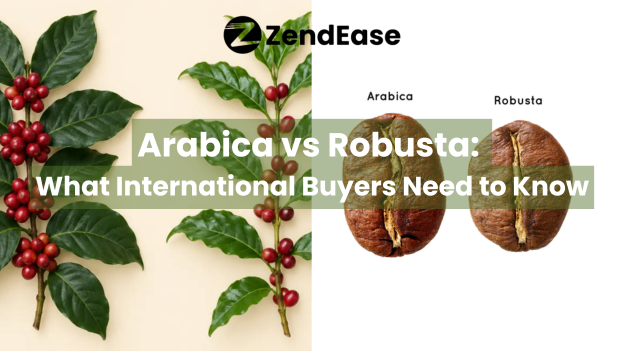
Arabica and Robusta are the two main coffee types international buyers encounter when sourcing from Vietnam, but they serve different market needs. Arabica is generally associated with a smoother, more complex flavor profile and higher prices, while Robusta is known for its stronger taste, higher caffeine content, and competitive pricing. The right choice depends on the target market, product application, and budget.
Vietnam is particularly important in the global coffee market because of its strong Robusta production, while Arabica is also available from selected growing regions.
Arabica vs. Robusta: What's the difference?
| Feature | Arabica | Robusta |
|---|---|---|
| Taste | Smoother and more aromatic | Stronger, more bitter, earthy |
| Caffeine | Lower | Higher |
| Price | Generally higher | Generally more competitive |
| Common use | Specialty and premium coffee | Blends, instant and commercial coffee |
| Vietnam supply | Smaller production | Major part of Vietnam's coffee industry |
These are general characteristics. Actual quality and flavor can vary depending on origin, growing conditions, processing, grade, and roasting.
Which coffee is better for international buyers?
Neither variety is universally better—the right choice depends on the product and customers you are targeting.
Arabica is often preferred for specialty and premium coffee because of its smoother profile and range of possible flavor characteristics. It can be a good fit for buyers who want to highlight origin, processing, and flavor.
Robusta offers a stronger taste, heavier body, and higher caffeine content. It is widely used in commercial coffee, instant coffee, and blends where strength, consistency, and cost are important.
Many products also combine both varieties to achieve a particular balance of flavor, body, caffeine, and price.
Which one is more expensive?
Arabica generally commands a higher price than Robusta, although actual prices depend on quality, grade, origin, processing, and market conditions.
For buyers, comparing price per kilogram alone is not enough. The coffee also needs to meet the required flavor profile, quality specifications, and intended use.
When sourcing from Vietnam, buyers should clarify the required variety, grade, processing method, packaging, and quantity before requesting a final quotation.
Which markets prefer Arabica or Robusta?
Arabica tends to be more attractive to specialty and premium coffee markets, while Robusta has strong demand in commercial coffee applications.
Specialty buyers may place greater emphasis on origin, flavor, processing, and brewing characteristics, making Arabica a common choice.
Robusta is widely used for instant coffee and blends, where its stronger flavor, body, and competitive pricing can be valuable.
There is also significant overlap between the two. Market preferences vary by country, product category, and consumer habits, so buyers should choose based on their specific target market rather than assuming one variety is always preferred.
Why is Vietnam important for coffee sourcing?
Vietnam is especially well positioned for Robusta sourcing because of its established production and export industry.
The country's coffee-growing regions are supported by supply chains covering farming, processing, storage, and export. This gives international buyers access to commercial volumes for different applications.
Vietnam also produces Arabica in selected growing areas. Buyers looking specifically for Vietnamese Arabica should consider origin, available volume, processing method, and supplier capabilities when evaluating their options.
For either variety, it is important to confirm product specifications, quality requirements, packaging, quantity, and processing timelines with the supplier before arranging transportation.
What should buyers consider when shipping coffee from Vietnam?
Once the coffee has been sourced, logistics become another part of the purchasing decision.
Shipping costs can depend on cargo weight, volume, packaging, destination, and transportation method. Larger commercial orders may be more suited to sea freight, while smaller or time-sensitive shipments may require a different arrangement.
Buyers should also check the import requirements of the destination country before the coffee leaves Vietnam. Agricultural products may be subject to specific documentation, inspection, or food-safety requirements depending on the destination.
Planning these requirements early can help prevent delays after the shipment arrives.
Final Thoughts
Arabica and Robusta have different strengths in the international coffee market. Arabica is generally associated with premium and specialty applications, while Robusta offers strength, body, and competitive pricing for commercial products and blends.
Vietnam is particularly important for Robusta sourcing while also offering Arabica from selected growing regions. For international buyers, the best choice depends on the target market, product requirements, quality expectations, and budget.
After sourcing, businesses also need a shipping plan that matches the size and requirements of the cargo. ZendEase by 1Export supports international logistics from Vietnam, including cargo handling and air or sea freight arrangements based on shipment requirements.